Project Background
Compact packaging solutions for multi-size orders
The client is a company that specializes in the production of food consumables such as pizza bags. Their main product is pizza bags, and their orders are characterized by multiple specifications and multiple batches.
The client's core need is to upgrade the downstream packaging process under limited production space, with the goal of reducing reliance on manual labor and achieving automatic sorting and palletizing of finished boxes with different barcodes, in order to improve shipping accuracy and overall efficiency.
Solution
We provide our customers with a compact packaging line that integrates unpacking, sealing, and automatic palletizing, and achieves overall line coordination through a central control system.
Centralized Management and Intelligent Control: To effectively address issues such as cumbersome operation, difficult troubleshooting, and low linkage efficiency in multi-device collaborative operations, a high-priority equipment central control interlocking system was installed on the production line. This system enables one-button start/stop, one-button on/off, one-button reset, and centralized monitoring, serving as the core for efficient collaboration and stable operation of the entire production line.
Unpacking and Material Preparation: The carton erector automatically picks up cartons and forms them. The upper roller conveyor is used for empty carton storage and is linked to the carton erector via photoelectric signals. It automatically stops and starts by monitoring whether the carton is full, ensuring a continuous and stable supply of empty cartons to the manual packing station.
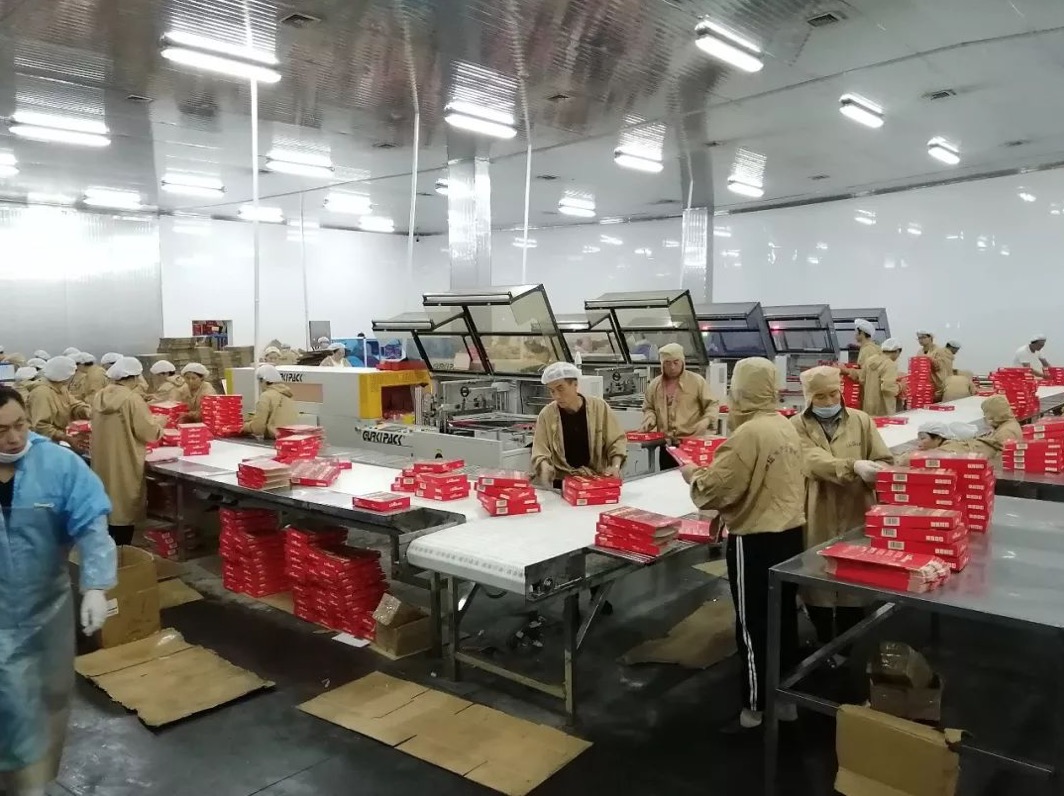
Manual packing and sealing: After the operator removes the empty box and completes the packing, the carton is placed into the lower roller conveyor and automatically conveyed to the sealing section, where the straight-line folding and sealing and the four corner sealing are completed in sequence.
Conveying and sorting: The lifting and transferring mechanism ensures that the cartons are smoothly transferred between workstations and achieves precise docking.
Before palletizing, the barcodes of the cartons are identified by separate scanning cameras to identify the three categories of A, B, and C. The system then controls the cartons to enter different conveyor lanes based on the barcode signals.
Intelligent lane and barcode sorting: The front end of the palletizing system is equipped with lane and barcode sorting cameras to automatically identify the A, B, and C barcodes on the cartons and issue instructions for subsequent sorting and palletizing.
Automatic sorting and palletizing: To meet sorting requirements, two double-palletizing machines were planned.
Type A cartons are sent directly to the first palletizer; Type B and C cartons flow to the second palletizer, where they are automatically assigned to different pallet positions on the left and right after a second barcode scan, thus completing the automatic classification and palletizing of the three types of products.
Project Highlights
Centralized control of the entire production line, making operation and maintenance simple: Through the equipment master control interlocking system, centralized monitoring and logical linkage of equipment in each section are realized, which greatly simplifies the operation process, improves the efficiency of fault response and handling, and ensures the coordination and stability of production line operation.
Compact layout and complete process: Under the condition of limited space at the customer's site, the entire process from unpacking, manual packing, sealing to automatic sorting and palletizing has been integrated, with a compact layout and clear workflow.
Mixed processing and automatic stacking: One line can handle the mixed production of more than three types of barcode cartons. Through automatic barcode scanning and identification, the three types of products are accurately transported to three corresponding stacking positions, improving the versatility and automation of the production line.
This project successfully automated the downstream packaging process within the client's existing site conditions, significantly reducing labor costs.
By deploying automatic box unpacking machines, three-station box packing points, and back-end box sealing and palletizing equipment, the total number of workers has been reduced from 9 to 3, a reduction of approximately 66.7%, and the single-line staff configuration has been optimized from 3 to 1.
The system ensures accurate order delivery while significantly reducing the burden of manual palletizing and sorting, effectively helping customers achieve their cost reduction goals.
 Gurki Cooperation Case - Tobacco Industry: Unmanned Packaging Line
 Gurki Cooperation Case - 8+1-chute High-speed Intelligent Sorting Line for ...
 Gurki Cooperation Case - Germany E-commerce Smart Packaging Solution
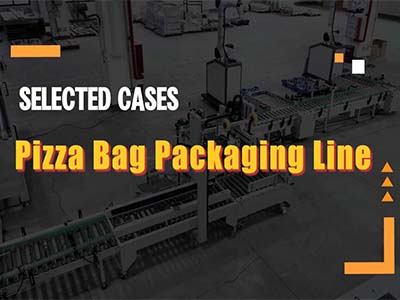 Gurki Cooperation Case - Pizza Bag Packaging Line
 Gurki Cooperation Case - Stainless Steel Bag Inserter Machine Solution
 Gurki Cooperation Case - PE Bottled Liquid Sugar Production Line ...
 Gurki Cooperation Case - Food Industry (Sausage) Packaging Line Solution
 Gurki Cooperation Case - Bag Food Packaging Line Solution
 Gurki Cooperation Case - Coffee Packaging Line Solution
 Crawfish farmers can pack 5,000 pieces in one hour